+255 753 428 884

info@tommytoursandsafaris.co.tz

The best time to visit Tanzania depends on what wildlife you’d like to spot. The country’s seasons and wildlife numbers are dictated by the rains, so you’ll have a slightly different experience depending on when you choose to visit.

Tanzania’s headline attraction is the Great Migration, which occurs year-round across the Serengeti. Many people flock here between July and September for a chance to witness huge herds of wildebeest and zebra crossing the Mara River — panic ensues as they try to avoid the jaws of crocodiles and other predators waiting to pounce. You’ll see lots of vehicles in the park at this time of year, though.

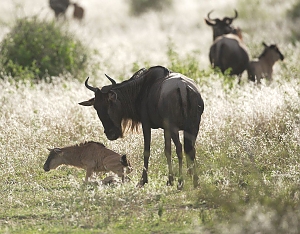
Tanzania’s ‘green season’, between November and March, is much quieter. While there’s a chance of rain showers, it’s a fantastic time for birdwatching as migratory species arrive in their thousands. You’ll also see Great Migration herds with their newly born calves.

The only time we tend to avoid Tanzania is between April and May, when heavy rains can disrupt wildlife viewing.


Tanzania Climate Guide
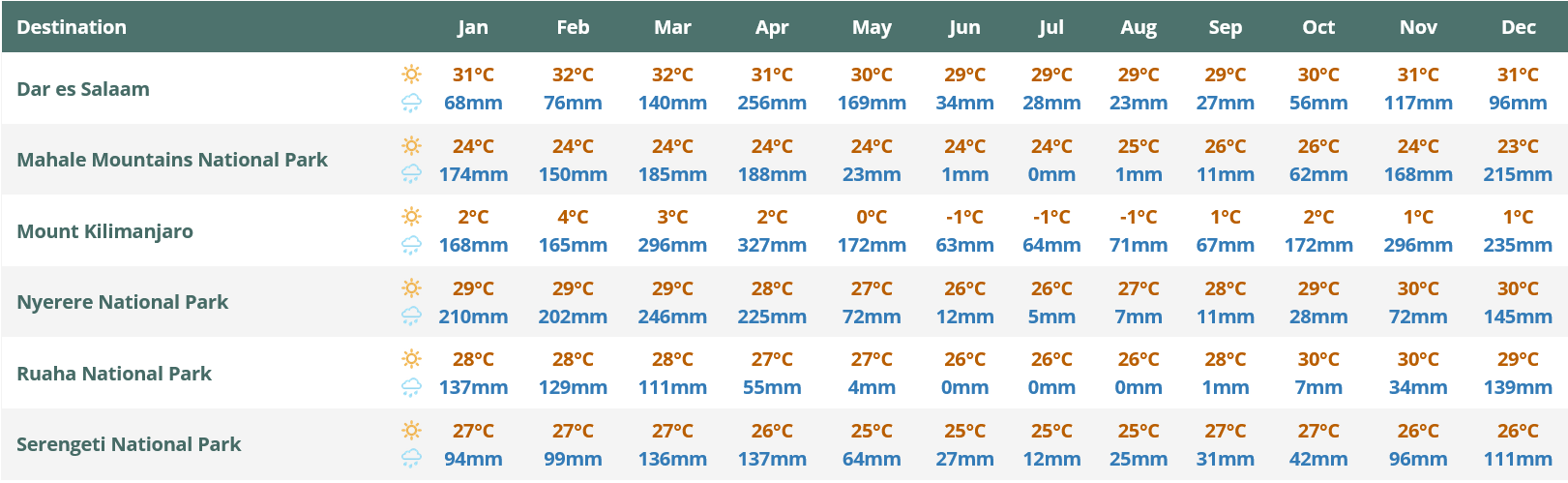
Tanzania Climate Guide

Month-by-month guide for travelling in Tanzania

Explore the natural beauty of Tanzania with our Tours which takes you to some of the best destinations of Tanzania.

Visiting Tanzania in January

There is a chance of rain, the temperature is getting higher and the humidity is building. It's still a good time to go as rates are lower and safari is excellent. At this time of year the migration herds are in the southeast of the Serengeti for calving season, so the Ndutu Plains are busy but it is amazing to see so many animals in one place.

Visiting Tanzania in February

Migration is still occurring in Ndutu. The weather is hot and humid with a chance of rain.

Visiting Tanzania in March

Migrating herds are starting to leave Ndutu, heading west toward Grumeti. This is truly low season, before the heavy rains but with humidity building. Great rates can be taken advantage of at this time of year.

Visiting Tanzania in April - May

This is a period of heavy rain, so we would advise against travelling at this time. 

Visiting Tanzania in June

This is the green season, bringing lush grasses and bush that can make spotting game more difficult. However, this is still a wonderful time to travel — particularly for bird watchers as parks are full of migratory birds; especially in the south. Migration should be in the Grumeti area of the Serengeti heading north.

Visiting Tanzania in July

This is the start of the peak season. The Migration is in the north of the Serengeti moving toward Kenya, and elephant start to gather in Tarangire. The land is getting drier and spotting game is becoming easier. Temperatures are in the high 20°Cs to early 30°Cs and the humidity is low.

Visiting Tanzania in August

Peak season. Migration is still in the north. As the land becomes more parched, the animals' behaviour becomes more predictable. The dense bush in Ruaha is drying out so game spotting here becomes much easier.

Visiting Tanzania in September

Peak season. The end of the migration is still in the north, with herds on both sides of the Kenya and Tanzania borders and high numbers of elephant in Tarangire. The northern circuit can be very busy, but it is less busy in the south, so for those who want to avoid crowds it's best to visit the southern parks.

Visiting Tanzania in October

Peak season. The migration is now in Kenya, but the game viewing in central Serengeti is still very good. Southern parks are particularly rewarding at this time of year.

Visiting Tanzania in November

Short rains. This is a great time to take advantage of low season rates and is still a popular time to travel. The rains tend to be overnight, but there is a risk of rain during the day as well. Migrating herds are starting to travel south from Kenya, so crossings can be seen in the north of the Serengeti.

Visiting Tanzania in December

There is a chance of rain, but this is generally overnight. Temperatures and humidity start to build. Safari is good, with migrating herds in the north travelling south to Ndutu. The festive season can be very busy and needs to be planned well in advance to ensure availability.